

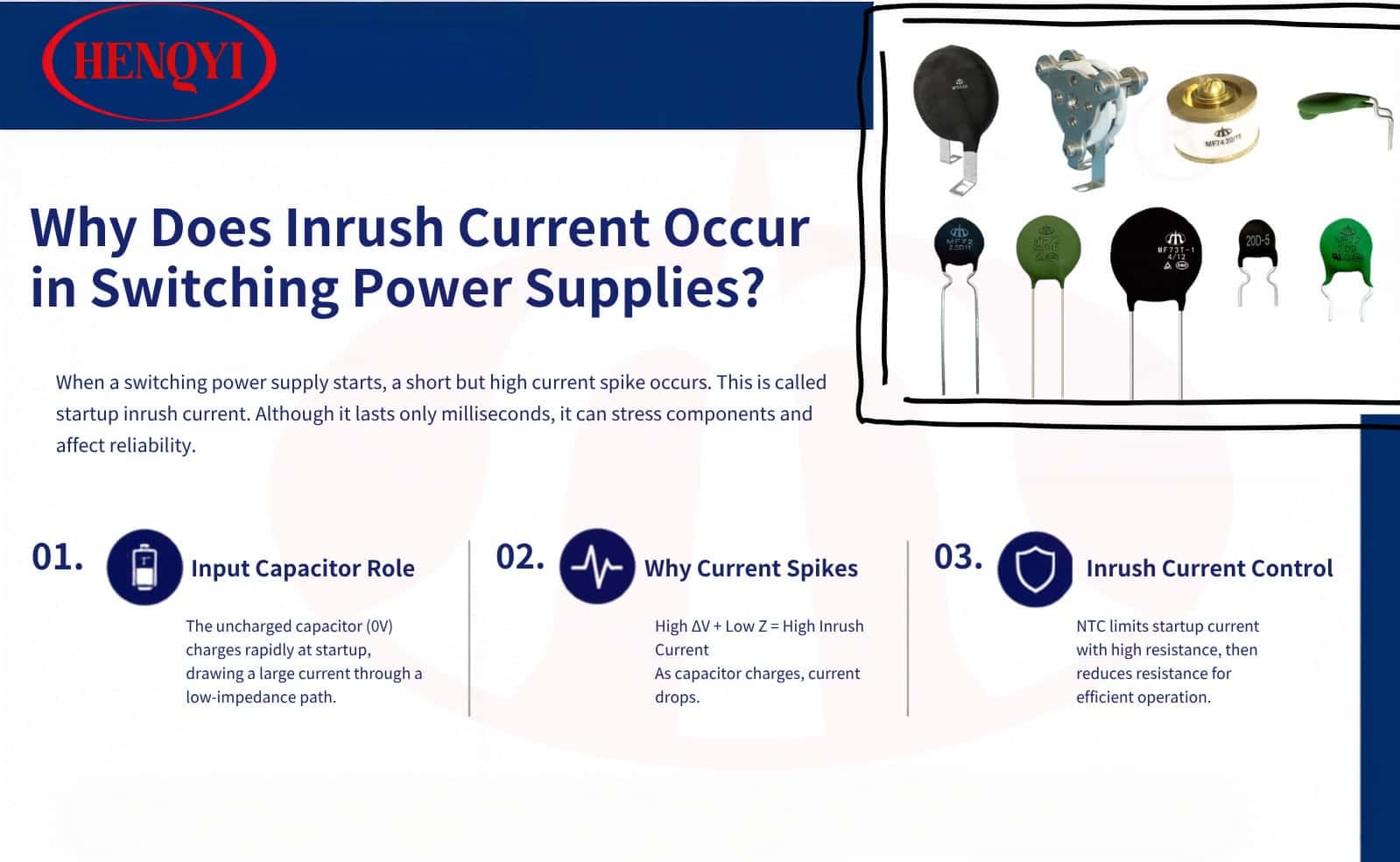
When a switching power supply is turned on, a short but high current spike may occur before the system reaches normal operation. This phenomenon is known as startup inrush current. Although the duration is usually very short, the peak current can be several times higher than the rated operating current, creating stress on components such as fuses, bridge rectifiers, switches, relays, and power semiconductors.
The Role of the Input Capacitor
Most switching power supplies include a large electrolytic capacitor at the input stage. This capacitor is used to store energy and smooth the rectified voltage. Before power is applied, the capacitor is fully discharged, meaning:
- The capacitor voltage is nearly 0 V
- No energy is stored inside
- The charging path has very low impedance
When AC power is connected, the rectified mains voltage is directly applied to the empty capacitor. The capacitor tries to charge rapidly, causing a large current flow in a very short time.
Why Does the Startup Current Become So Large?
The charging current is mainly determined by the voltage difference and the total impedance in the charging path: I = ΔV / Z
At the moment of startup:
- The voltage difference between the power source and capacitor is high
- The line resistance is very small
- The capacitor ESR (Equivalent Series Resistance) is also very low
Because the charging path impedance is extremely low, the current can rise sharply and create a large inrush current peak. As the capacitor charges, its voltage gradually increases. The voltage difference becomes smaller, so the charging current decreases and eventually returns to the normal operating level.
Other Factors That Increase Inrush Current
Besides capacitor charging, other components may also contribute to the peak current:
Bridge Rectifier Conduction
At startup, the bridge rectifier diodes begin conducting immediately when AC power is applied. The sudden current flow through the rectifier can increase the initial current peak.
MOSFET Switching Surge
In many switching power supplies, the main power MOSFET experiences a transient current surge during startup. This temporary stress can further increase the peak inrush current.
Why Is Inrush Current a Concern?
Although startup inrush current lasts only milliseconds, repeated high‑current pulses can affect component reliability. Potential impacts include:
- Fuse stress or unexpected triggering
- Reduced lifetime of rectifier diodes
- Contact damage in relays and switches
- Increased stress on power semiconductors
- Reduced system reliability
Conclusion
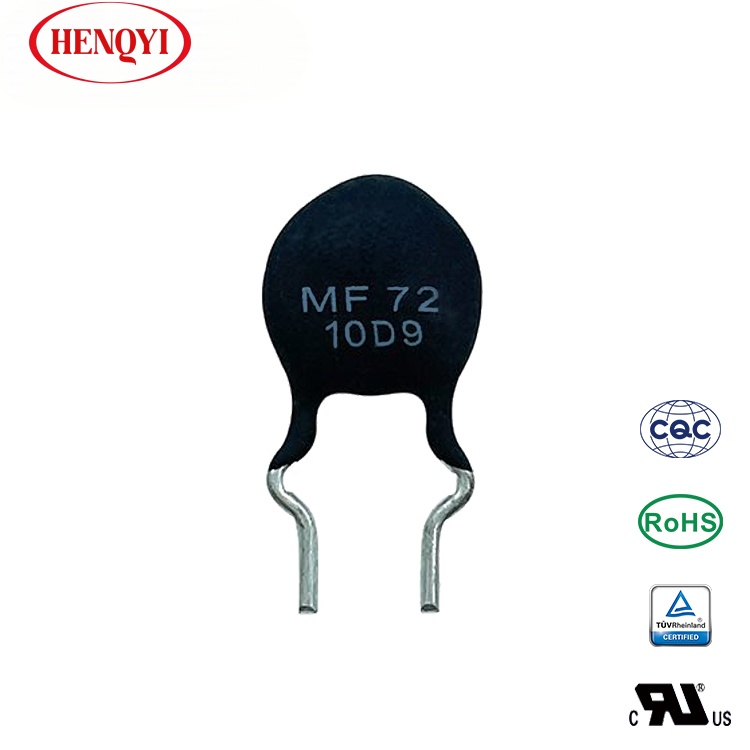
Fixed resistors provide a simple way to limit inrush current, but they continue consuming power after startup. NTC thermistors offer a more flexible solution by providing high resistance during startup and lower resistance during normal operation.
For applications requiring reliable startup protection and improved energy efficiency, power NTC thermistors are widely used as an effective inrush current limiting solution. SHENZHEN HENQYI provides customized power NTC thermistors for inrush current limiting, power protection, and high‑reliability electronic applications.