

As smart home products continue to evolve, automatic clothes drying racks have become far more than simple lifting systems. Today's models integrate LED lighting, heating and drying functions, UV sterilization, obstacle detection, and even app or voice control.
Behind this convenience and intelligence, however, lies a complex electronic system that must remain stable every time the device powers on. One small but critical component plays a key role in protecting that system: Inrush current limiter MF72.
Why Automatic Drying Racks Face Electrical Stress?
An automatic clothes drying rack combines mechanical motion and electronic control in a compact structure. Inside the ceiling‑mounted main unit are the control board, motor, power supply, and various auxiliary circuits. These components work together to drive lifting, lighting, and heating functions.
Each time the rack is switched on, the power supply experiences a sudden inrush of current. Large filter capacitors inside the power circuit start from zero voltage and charge instantly when power is applied. This brief moment can create a current surge many times higher than the normal operating current.
You can think of it like opening a valve to an empty water tank. At the very first moment, water rushes in at full force. In electrical terms, that surge can damage rectifier bridges, stress capacitors, and shorten the lifespan of the entire control board if left unmanaged.
How the MF72 NTC Thermistor Controls Inrush Current?
The MF72 is a negative temperature coefficient (NTC) thermistor, designed specifically to tame this startup surge.
-
High resistance at startup:
When the device is off and at room temperature, the MF72 has a relatively high resistance. As power is applied, this resistance limits the initial surge current, protecting sensitive components downstream.
-
Low resistance during normal operation:
As current flows, the thermistor heats up. Its resistance drops rapidly to a very low level, allowing normal operation with minimal power loss. At this stage, it becomes almost "invisible" to the circuit.
This self‑adjusting behavior makes the MF72 both simple and highly effective, no control logic, relays, or additional circuitry required.
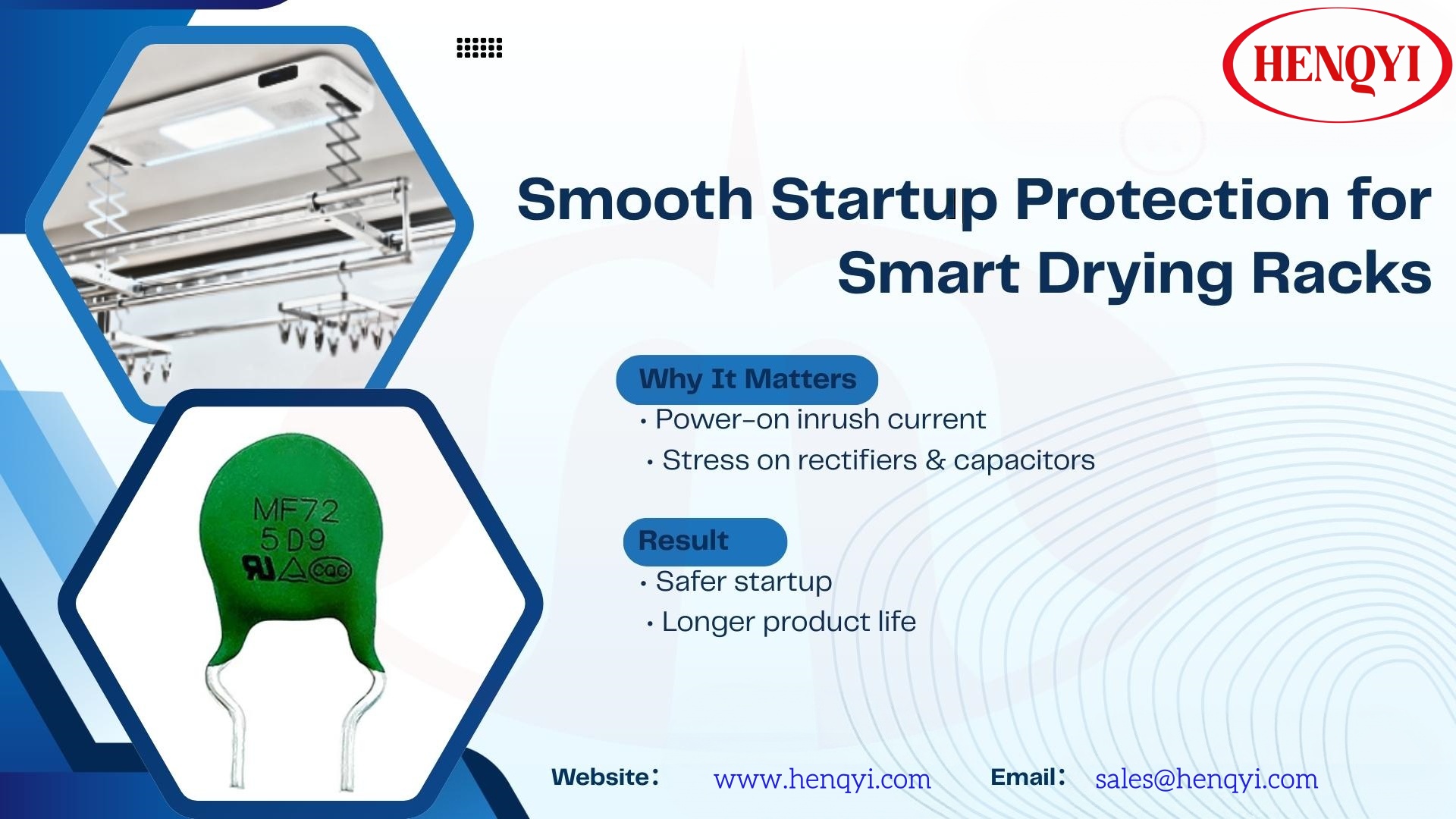
Key Benefits in Automatic Drying Rack Applications.
In real‑world use, Inrush current limiter MF72 deliver several important advantages:
-
Protection of rectifier bridges:
The rectifier is often the first component to suffer from inrush stress. MF72 provides a buffer that prevents overload and premature failure.
-
Extended capacitor lifespan:
By smoothing the charging process, MF72 reduces stress on electrolytic capacitors, helping prevent bulging, leakage, and early aging.
-
Quiet and maintenance‑free operation:
Unlike relay‑based solutions, NTC thermistors operate silently, without sparks or mechanical wear.
-
High cost‑performance ratio:
A low‑cost component that protects much more expensive parts delivers excellent long‑term value.
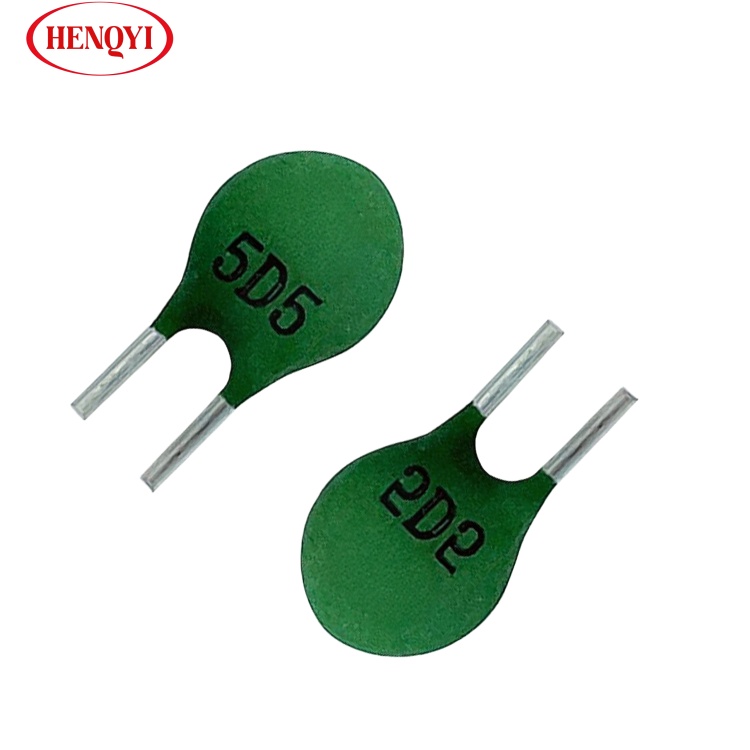
A Reliable Choice for Modern Home Appliances.
As automatic clothes drying racks become more powerful and feature‑rich, the demand for stable and safe power design continues to grow. The MF72 series from SHENZHEN HENQYI are widely used not only in smart home appliances, but also in power supplies, adapters, and other electronic systems where inrush current control is essential.
With a full range of disk sizes from Φ3 mm to Φ40 mm, including higher‑power models such as MF74 and MF75. SHENZHEN HENQYI provides flexible, one‑stop solutions for applications ranging from a few watts to several kilowatts.
Sometimes, the most important protection in a smart device is the one users never see. Inrush current limiter MF72 quietly ensure that every startup is smooth, safe, and reliable, helping smart home products perform better and last longer.