

As residential solar energy systems become a global standard, the inverter has emerged as the critical "brain" of the installation—responsible for converting DC power from photovoltaic panels into usable AC electricity. In modern home energy ecosystems, inverter reliability is the primary driver of overall energy efficiency, system stability, and equipment longevity.
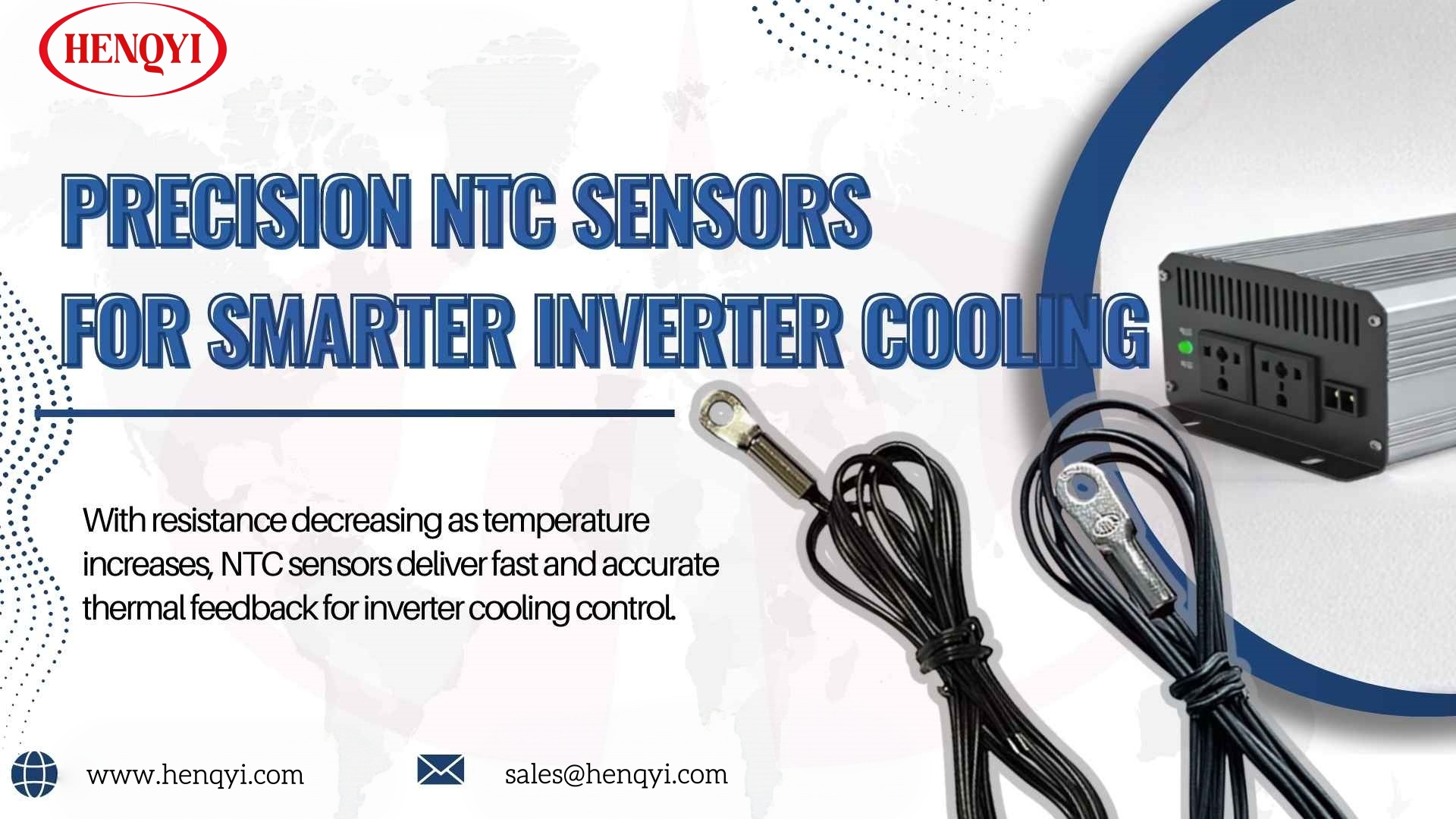
With the push toward higher power density and more compact designs, managing internal heat has become a significant engineering hurdle. The CWF4‑103F3950 NTC temperature sensor from SHENZHEN HENQYI is specifically engineered to meet this challenge, providing the precision and durability required for advanced thermal monitoring in residential inverters.
I. Thermal Challenges in Compact Residential Inverters
Modern residential inverters (typically 3 kW‑5 kW) are increasingly designed to be sleek and integrated. While this improves installation aesthetics and flexibility, it creates a high‑stakes thermal environment:
- 1. Localized Hotspots: Power components such as IGBTs and MOSFETs generate hundreds of watts of heat. In a confined enclosure, uneven heat distribution can lead to localized overheating, which accelerates component aging and increases the risk of catastrophic failure.
- 2. Rapid Thermal Transients: Under dynamic load conditions, such as when a PV system ramps up from idle to peak output, temperatures can spike within seconds. Traditional sensors may be too slow to trigger protective measures.
- 3. Efficiency vs. Cooling Trade‑off: Excessive cooling increases the system's "parasitic" power consumption, while insufficient cooling leads to thermal derating. High‑precision NTC sensors enable an Active Temperature Control Loop to maintain the perfect balance.
II. The CWF4‑103F3950: Engineering Precision for Power Electronics
The CWF4‑103F3950 NTC sensor is built for applications where stable, fast, and accurate thermal feedback is non‑negotiable.
1. High‑Stability Sensor Materials
The sensor utilizes high‑purity metal oxide materials processed through advanced sintering to ensure highly consistent electrical characteristics.
- Nominal Resistance: 10k at 25℃
- B‑Value: 3950 K
- B‑Value Tolerance: 1%
This tight tolerance ensures predictable resistance‑to‑temperature behavior across a wide operating range, simplifying the design of the system's control algorithms.
2. Robust Mechanical Design
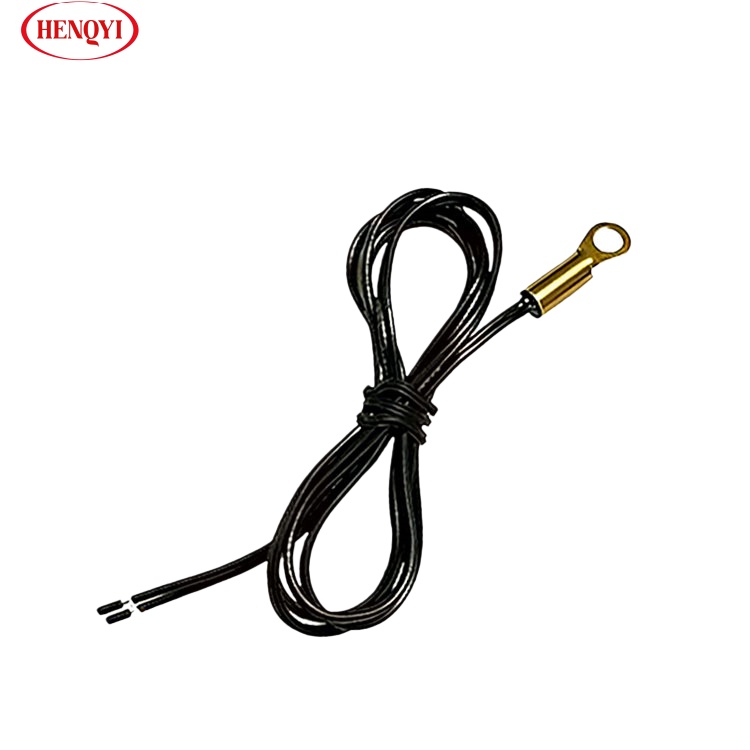
The sensing head is encapsulated in a 3.2 mm copper‑nickel plated ring terminal, offering several industrial‑grade advantages:
- High Thermal Conductivity: Allows for rapid response to temperature shifts.
- Secure Bolt‑on Mounting: The ring terminal design allows the sensor to be bolted directly to heat sinks or power modules, ensuring a permanent, vibration‑resistant thermal contact.
- Environmental Resistance: The nickel plating provides excellent protection against oxidation and corrosion in various outdoor climates.
3. Flexible Integration Options
To fit the diverse internal layouts of modern inverters, the sensor offers customizable wiring:
- Wire Insulation: Choose between PTFE (Teflon) for high‑heat environments or PVC for standard, cost‑effective applications (both UL‑certified).
- Custom Connectivity: Lead lengths and connector types (e.g., XH, PH, or VH terminals) can be tailored to match specific PCB headers.
III. Application Impact: 5 kW Residential Solar Inverters
By integrating the CWF4‑103F3950 near the power stage of a 5 kW inverter, manufacturers can achieve measurable performance gains:
| Performance Metric | Improvement Benefit |
|---|---|
| System Efficiency | Dynamic fan speed control based on precise data reduces internal energy loss. |
| Failure Rate Reduction | Real‑time monitoring prevents IGBT thermal runaway and junction temperature violations. |
| O&M Savings | Accurate thermal data allows for predictive maintenance, reducing unplanned downtime and truck rolls. |
IV. Supporting Reliable Energy Systems
In the world of power electronics, accurate sensing is the foundation of safety. The CWF4‑103F3950 NTC sensor by SHENZHEN HENQYI combines precision materials with a rugged mechanical design, making it a practical, high‑performance solution for inverter cooling systems.
As the world transitions to decentralized renewable energy, reliable thermal management components remain essential for building a more efficient and stable power grid.