
What are the key differences between Epoxy and Glass NTC thermistors?
The primary difference lies in their environmental resilience and temperature limits:
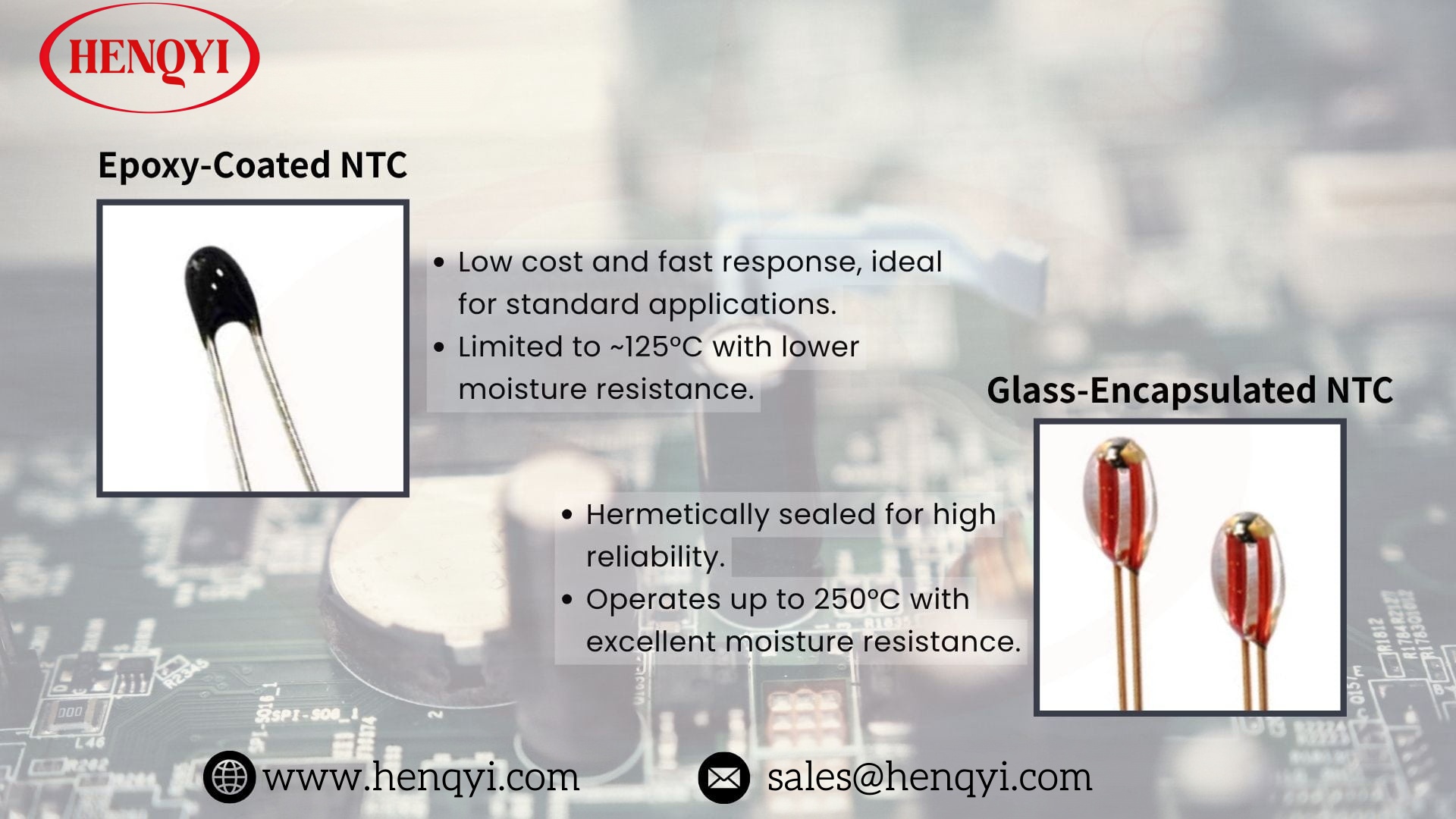
- Epoxy‑Coated NTCs are cost‑effective and provide a fast thermal response, but are typically limited to 125°C and are sensitive to moisture.
- Glass‑Encapsulated NTCs (like the MF58 series) offer a hermetic seal, making them waterproof and stable up to 250°C.
- "Bead‑type" refers strictly to the physical shape (small and rounded) rather than the material; both epoxy and glass thermistors can be bead‑type.
Comparison: Epoxy‑Coated vs. Glass‑Encapsulated.
Choosing the right encapsulation is critical because it directly impacts the sensor's long‑term stability and performance under stress.
| Feature | Epoxy‑Coated NTC | Glass‑Encapsulated NTC |
|---|---|---|
| Max Temperature | Up to ~125°C | 200‑250°C or higher |
| Moisture Resistance | Limited | Excellent (hermetic seal) |
| Response Speed | Faster | Slightly slower |
| Cost | Lower | Higher |
| Typical Use | Consumer electronics, PCB sensing | Automotive, industrial, high‑temp |
What Does "Bead‑Type" Actually Mean?
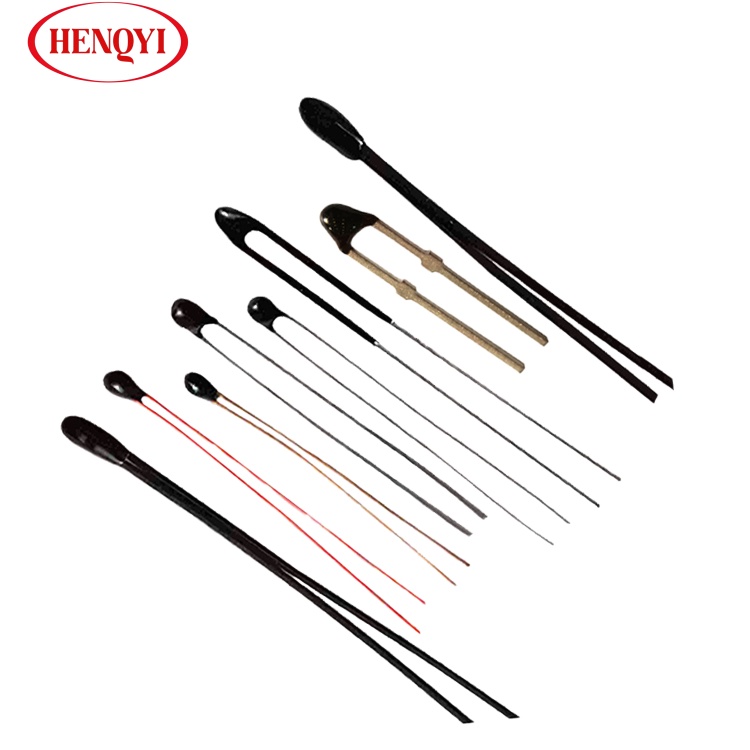
The term "bead‑type" is often misunderstood. It doesn’t describe how the thermistor is sealed, it describes its physical form.
- Shape‑based definition: A small, rounded structure, typically 0.5‑3 mm.
- Material‑independent: Can be epoxy‑coated or glass‑encapsulated.
- Why it’s used: Small size, lightweight, and easy to integrate.
Why Encapsulation Choice Matters for Engineers?
The encapsulation acts as the interface between the sensitive ceramic element and the outside world.
- Drift Prevention: In high‑humidity environments (like the steam ovens discussed previously), epoxy can allow moisture to reach the sensing element, leading to resistance drift or short circuits.
- Environmental Stress: Glass encapsulation provides superior resistance to corrosion and chemical exposure, ensuring the sensor's parameters remain stable over thousands of hours of operation.
How to choose?
The decision between epoxy and glass should be driven by the operating environment:
- Select Epoxy Bead NTCs for cost‑sensitive, dry, and room‑temperature applications.
- Select Glass Bead NTCs (such as the MF58) for high‑reliability requirements, high‑temperature zones, or environments where moisture ingress is a risk.